Strategy and measurement setup
We start by talking through what you want to achieve and who you want to reach. From there I set up Meta Pixel correctly, define what actually counts as a sale, and decide upfront where the budget should go.

ServicesMeta Ads Management
Facebook and Instagram, measurable results
On Facebook and Instagram, the heart of the work is putting your ad in front of the audience most likely to be interested in your product. I build that audience, measure everything from the click to the sale, and shift the budget toward whatever responds. The only thing I care about is whether the money spent comes back.
Why Meta Ads management?
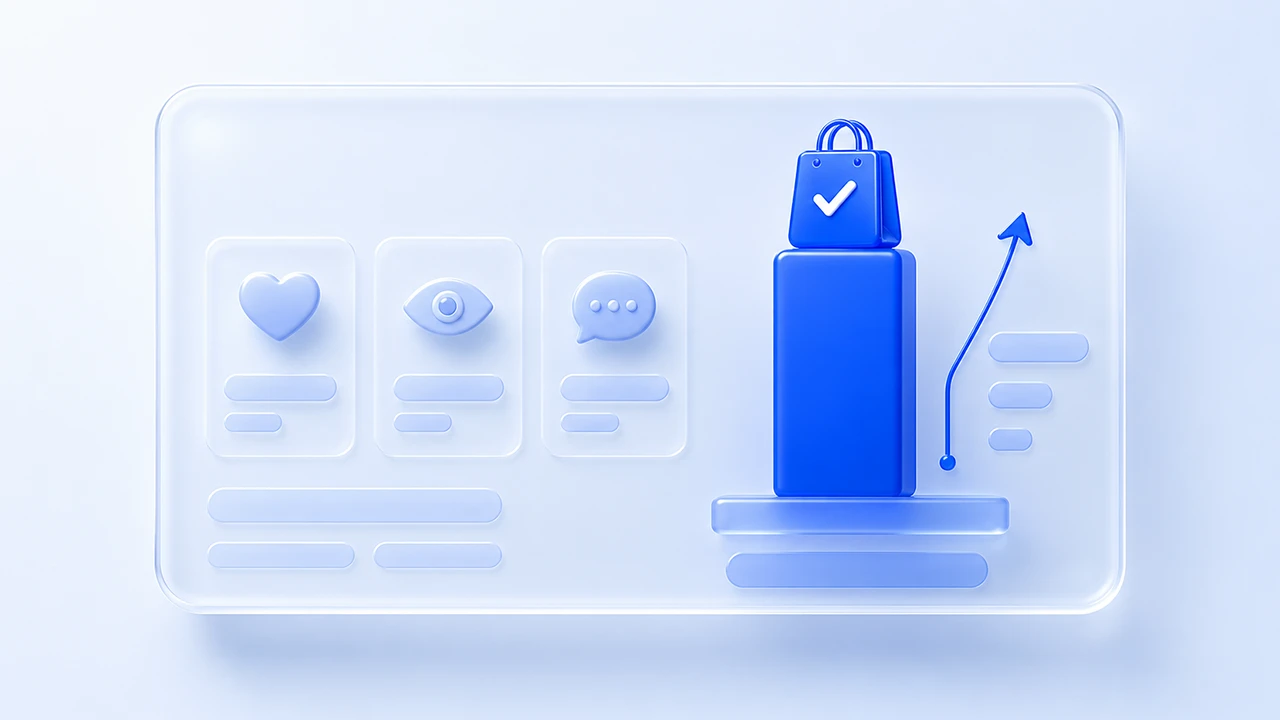
You ran an ad, the likes came in, the post reached quite a few people, maybe it even picked up a comment or two. Then the end of the month arrives and there's not much left in the way of sales. If that picture feels familiar, you're not alone: those nice numbers on the dashboard and the figure in your bank account usually tell two different stories.
The issue is rarely that the ad is bad. The targeting has drifted toward people who like to browse, conversion measurement was either never set up or left half done, and the creative has been shown to the same audience so many times that no one stops to look anymore. The money flows, but not in front of the people who are close to buying.
This part is my job. I build the campaign from the start to aim at sales, and I separate which ad actually brings in business from which one only collects engagement. You can find answers to the most common questions in thefrequently asked questions section below.
What's included
I run the process myself, from the first setup of the ad account to the daily fine tuning. There's no team or agency layer in between, I'm your point of contact at the start and at the end.
I point your ads at the audience that fits your business best, based on interests and behaviour. I build lookalike audiences that resemble your existing customers, and I also make use of Meta's Advantage+ automation.
I set up Meta Pixel correctly on your site and define the events that count real conversions like sales, form submissions and add-to-cart actions. That way the business your ads bring in stops being a click count and turns into a measured number. Once it's in place, I test that the data flows correctly and confirm it.
I shape the direction of the visuals and videos that stop the thumb in the feed, then compare different versions of the same idea across Facebook and Instagram, in feed, Reels and Stories placements. I push the version that holds up.
I reach back to the people who visited your site or looked at your ad and left without buying. The audience closest to a sale often sits right here, with the people lost one step short.
I move the money toward the audience, creative and placement that bring the most conversions. Instead of keeping spend on a line that isn't paying off, I cut it back as soon as I notice.
Each month I explain which ads are working, which ones no longer bring in business and where the budget went, in a clear and simple report. You'll never be left unsure which line your money went to in any given month.
Measurement and signal
Meta's algorithm grows whatever you teach it. Show it correctly which click turned into a sale and it heads toward similar buyers; fail to show it and it multiplies the wasted click. That's why, when I start on an account, my first job isn't the ads but getting the measurement right. I install Meta Pixel on your site, define events like sales and forms correctly, and set out clearly what actually counts as a conversion.
Once measurement is properly in place, the picture gets clear. We see plainly on screen which campaign brings in sales and which one drains the budget, and we set the direction accordingly. Even though browser measurement loses some of its share after Apple's privacy moves, I keep the data going to Meta as solid as possible by prioritizing conversion events and testing the setup.
Alongside measurement, you can see point by point what else I take on in the day-to-day of this work in the what's included section.

How I Work
First we clarify where we're heading, then I set up measurement properly, and after that we go through the campaigns at regular intervals and correct the course. You'll always see clearly which stage of the process we're at.
We start by talking through what you want to achieve and who you want to reach. From there I set up Meta Pixel correctly, define what actually counts as a sale, and decide upfront where the budget should go.
I build the right audience and run a few scroll-stopping creatives side by side across Facebook and Instagram. The data shows which message and format brings in sales, so nothing is left to guesswork.
I shift the budget toward the combinations that return the most and refresh any creative that starts to slip. Each month I walk you through the work in a clear report and scale up whatever is working, step by step.
Creative and testing
On Meta, while people swipe a finger every second, you have a few seconds to get your business across. So I set the direction of the image and video, and prepare versions that fit the feed, Reels and Stories placements of Facebook and Instagram separately. Instead of putting the same ad everywhere, I build whatever works for that placement.
I don't settle for a single creative. I run a few versions side by side, measure which hook and which format actually drive conversions, and swap out a creative whose performance drops when the time comes. I know the cost of showing the same ad to the same people too often climbs over time, and I head that off by watching frequency.
On the image and video side, I work alongside you. If you have usable material on hand we make use of it, and whatever is missing, I say so clearly up front.

Transparency and control
Your ad account, your Business Manager account, and all of your Pixel data are opened in your name and owned by you. I only come into the picture with partner or admin access. You don't need to hand me any password, and you can cut off my access with a single click whenever you like.
I keep the same openness in reporting. Each month I explain in a plain summary which ad is working, which one has slowed down, and where the budget is going. If something worth noting comes up, I let you know without waiting for the end of the month. The decision always stays with you, the load of the daily work with me.
If you're curious about how I work, you can take a look at a few of thebrands I've worked with before.
Frequently asked questions
These are what I'm asked most often before starting with Meta ads, and I've written the answers as clearly as I can. If you can't find what you're looking for here, don't hesitate to write to me directly.
On Meta, you reach people while they are not searching for you, which means you create the demand yourself. Businesses you can tell through an image or a video tend to do well here: e-commerce selling products, appointment-based services, local businesses. On Google a customer finds you while already searching, whereas on Meta you bring the message into the feed of the right person. Not every channel suits every business, so I listen to your business first and tell you honestly whether Meta is likely to work for you.
Reach, likes and comments sound nice, but on their own they do not fill the till. Those numbers usually swell when the targeting is set up for engagement instead of sales. I set the campaign up to drive a purchase, a form submission or a completed cart directly, and I connect conversion tracking so it actually counts those. Together we separate which ad only gathers engagement from which one genuinely brings in business. Then we shift the budget away from the flashy numbers toward the result we measure.
The foundation of measurement is Meta Pixel. This code I install on your site reports a visitor's steps, like a purchase, a form submission or an add to cart, back to Meta. Without the Pixel you cannot see whether the ad truly brings in business, you only count clicks. I install the Pixel, define which events count as conversions, and after setup I test that everything fires correctly. That way we make decisions from the data we measure rather than from guesswork.
After Apple's tracking restrictions, browser-based measurement dropped off somewhat, and I will say that plainly. I install the Pixel correctly, set which conversions count as priority, and test that the data actually reaches Meta. That way the picture we have is as solid as it can be. Even so, I tell you clearly which number is fully measured and which one is modeled, and share it that way.
On Meta a creative has a limited lifespan. The more the same image is shown to the same audience, the higher the frequency climbs, performance starts to slip, and the cost per click creeps up before you notice. I watch the frequency and performance data, swap out a creative that is losing its strength for a fresh one, and test a few versions to measure which message and format land best. On the image and video side I move forward together with you. If you have material on hand we use it, and if not, I tell you clearly what content is needed.
There is no single figure that fits everyone. Your sector, your goal and the size of your audience determine it. The real point is finding a budget that gets past Meta's learning phase and lets the data become meaningful, without straining you. Too low a budget cannot feed the algorithm enough, and reading the results gets harder too. So I test first and scale up the campaigns that work. We set a realistic starting range together based on your goal.
You own both your ad account and your Business Manager account, and it stays that way. I work only with partner or admin access, and billing stays on your side. You can see every campaign, every spend and every report whenever you want, and if you wish you can cut off my access with a single click. Even if our paths part one day, the account, the Pixel data and the entire history stay with you.
The first signs usually show within a few days, but getting past Meta's learning phase and letting the data settle generally takes two to four weeks. In the early days I do not change course based on a single day's number, because a lasting result only emerges with a trend. Throughout the process I share how the frequency, cost and conversion data are trending in plain reports, and I explain what I changed and why.
Some of the reference brands























Let's plan a conversation
Let's look together at how your current Meta ads are doing and talk about where it makes more sense to start. We'll also clarify from the outset what kind of path we'll follow based on your goals.
Let's plan a callWe use cookies to measure ad performance and visitor statistics. Privacy notice